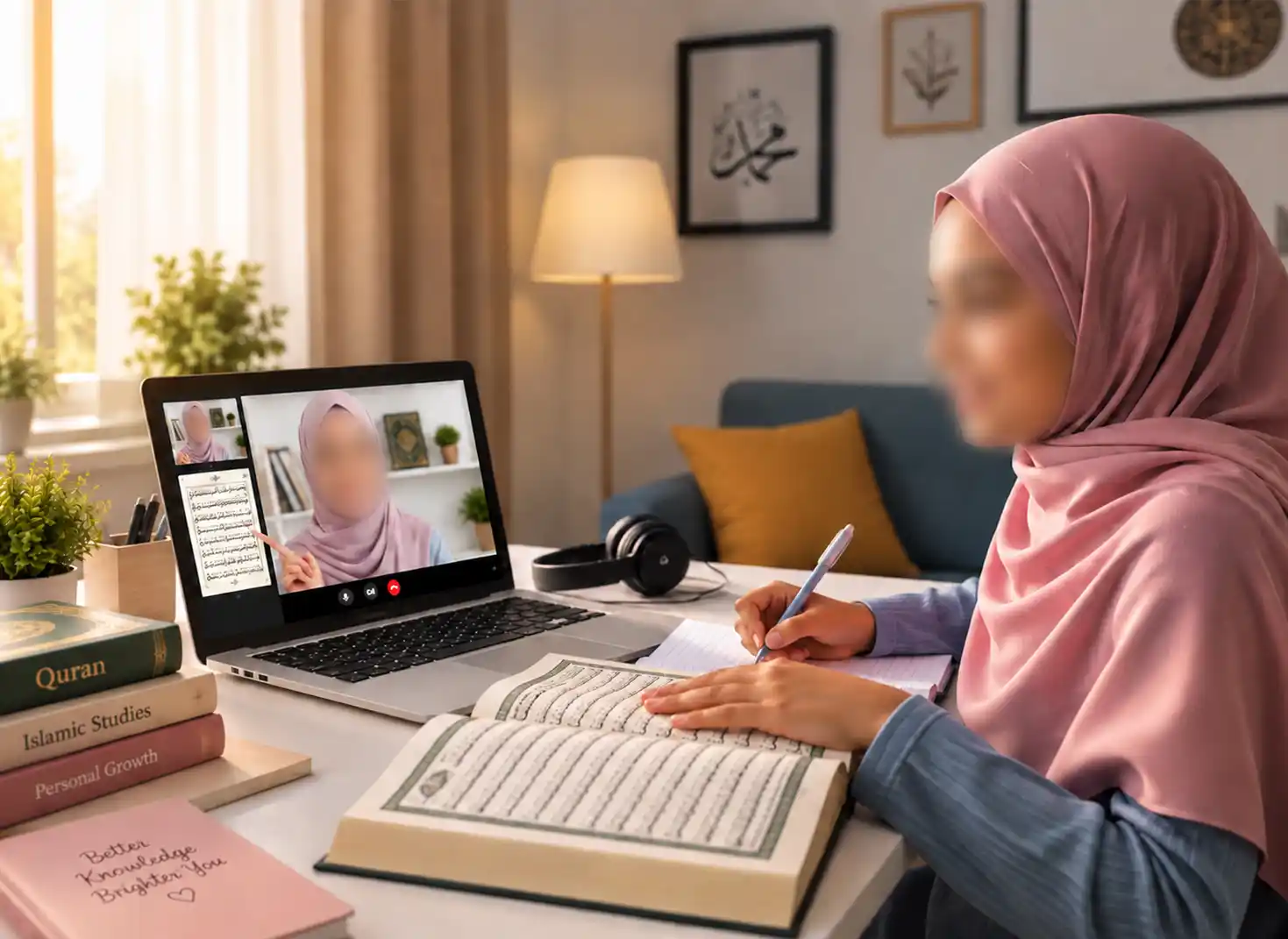
This guide will show you how do you read the Quran step by step, in a way that works for kids, teens, and adults—and feels realistic for busy families.
How Do You Read the Quran? (Quick Answer for Beginners)
If you want the simplest answer to how do you read the Quran, use this 5-step plan:
- Learn the Arabic letters and their sounds
- Learn the harakat (vowel marks) so you can pronounce words
- Practice joining letters until you can read slowly without guessing
- Start with short surahs (the ones you hear in salah)
- Add Tajweed gradually so your pronunciation becomes correct and steady
A lot of beginner guides emphasize the same key idea: consistency beats intensity. Fifteen focused minutes daily is better than a long session once a week.
Start With the Foundations (Letters → Harakat → Joining)
When people struggle, it’s usually not because they’re “bad at Quran.” It’s because they skipped a foundation.
Here’s the order that works for most non-Arabic speakers:
- Arabic letters (28 letters): recognize them in different shapes (start/middle/end)
- Harakat: fathah (a), kasrah (i), dammah (u), plus sukoon and shaddah
- Joining practice: read simple joined words daily until it feels normal
This is also why Noorani Qaida-style learning stays popular: it builds reading in small steps instead of throwing you into full pages too early. Many top guides explicitly recommend starting with a Qaida before expecting fluency.
Learn Quran from Scratch on Quran From Home for readers starting from zero.
Read the Quran Correctly (Tajweed Basics That Matter Most)
A key part of how do you read the Quran correctly is learning the basics of Tajweed. Tajweed is not about showing off a beautiful voice. It’s about pronouncing Arabic in a way that protects the words and meaning.
Allah commands measured recitation (tartil), and many Tajweed guides build from this principle.
If you’re a beginner, don’t try to memorize 30 rule names. Start with what helps immediately:
- Makharij (letter articulation points): where each letter comes from (throat/tongue/lips)
- Heavy vs light letters: small changes can make a word sound like a different word
- Basic stopping (waqf): don’t stop in the middle of a word
Read more: Importance of Tajweed
Read With Understanding (English Meaning + Tafseer Without Confusion)
A very common question behind how do you read the Quran is really: “How do I connect to it?”
A simple method that works for families:
- Read a short portion in Arabic (even slowly)
- Then read the English meaning
- Then take one small action: “What can we apply today?”
Several guides stress that translation is an explanation of meaning, while recitation (tilawah) is done in Arabic—even for non-Arabic speakers. That’s why a “both/and” approach is so helpful: Arabic for worship + English for understanding.
Quran From Home’s Islamic Studies and Tafseer for families ready to go deeper
Practical Tips for Parents + Busy Adults (10 Minutes a Day)
If you’re teaching a child, the goal is not perfection in one week. The goal is a routine that keeps the Qur’an warm in their heart.
Try this 10-minute daily routine:
- 2 minutes: listen to a slow recitation and follow with a finger
- 4 minutes: child repeats phrase-by-phrase
- 2 minutes: “close the mushaf” test (recite without looking)
- 2 minutes: review yesterday’s lines
Parent tip: correct only the big mistakes at home. Save fine Tajweed details for the teacher, so your child doesn’t feel constantly “wrong.”
Learn Arabic Online course with Quran From Home
Common mistakes to avoid
- Doing Tajweed before you can read slowly (it feels like chaos)
- Practicing mistakes repeatedly (it turns into a habit)
- Expecting kids to sit too long (short sessions win long-term)
- Only reading Arabic with no meaning (motivation often drops)
FAQs
1) Do I need wudu to read the Quran?
Many scholars recommend wudu as best practice. If you’re touching a physical mushaf, it’s commonly taught that purity is required; if reciting from memory, it’s not required (though still recommended).
2) Where should I start reading?
If you’re learning to recite, many beginners start with short surahs used in salah, then build outward. If you’re reading for understanding, start with a clear English translation alongside Arabic.
3) How long does it take to learn?
It depends on consistency and your starting point. Many programs describe timelines in weeks/months for specific goals (like improving Al-Fatihah first), but steady daily practice matters most.
4) Can I learn without a teacher?
You can start with apps and audio, but reliable scholars and many learning guides still emphasize that the best improvement comes from reading to a qualified teacher who can correct you live.
Learn Step-by-Step With Quran From Home
So, how do you read the Quran in a way that actually works? You start small, follow the right order, practice a little each day, and get live correction before mistakes become habits.
At Quran From Home, we help non-Arabic speakers (kids, teens, and adults) learn Quran reading and Tajweed with patient, structured, 1:1 guidance:
- Learn Quran Online (reading + foundations)
- Learn Tajweed Online (pronunciation + rule application)
- Learn Arabic Online (to understand what you recite)
Ready to begin? Book your free trial through Quran From Home and start with a plan that fits your family and your time zone.